How to Build a 30-60-90 Day Plan for New Hires (2026)
Contents
The first 90 days set the trajectory for everything that follows. A new hire who feels lost in week two often never catches up. A new hire who ships something real by day 30 builds momentum that compounds for years. BambooHR's 2025 Onboarding Benchmarking Report found 32% of new hires walked away from onboarding disappointed, climbing to 40% for Gen Z employees. A clear plan turns those numbers around.
That is what a 30-60-90 day plan is for. Not a checklist for HR or a document the manager owns. A shared playbook that takes the new hire from learning to contributing to owning their work.
This article walks through each phase with templates you can adapt, an interactive board to draft your own, and the common mistakes that turn good plans into paperwork.
"The actions you take during your first few months in a new role will largely determine whether you succeed or fail." - Michael D. Watkins, Author of The First 90 Days and Professor of Leadership at IMD Business School
What is a 30-60-90 Day Plan?
A 30-60-90 day plan is a written guide for a new hire's first three months. It breaks the role into three phases with distinct goals: learn the work, contribute meaningfully, then own an area of responsibility.
The framework comes from Michael Watkins' research on leadership transitions, originally developed during his time at Harvard Business School and refined at IMD. The version most companies use today applies the same logic to any role. Each phase has measurable milestones. The hire and manager review progress weekly, and the plan evolves as both sides learn what the role actually demands. Pair it with clear company goals and objectives so the new hire understands how their work ladders up.
Done well, a 30-60-90 plan does three things. It gives the new hire confidence about what success looks like. It gives the manager a structure for feedback. And it surfaces problems early, while there is still time to fix them.

The Three Phases at a Glance
Each phase has a distinct purpose. The new hire's job changes from absorbing context, to delivering work with support, to running their own corner of the business. The manager's job changes too: from teaching, to coaching, to stepping back.
| Phase | Goal for the new hire | What the manager does |
|---|---|---|
| First 30 daysLearn | Understand the team, the work, the tools, and the customer. Ship one small thing. | Pair the hire with a buddy. Set up tools and access on day one. Schedule weekly 1:1s. |
| Days 31-60Contribute | Take ownership of recurring work. Build cross-team relationships. Run a small project end to end. | Hand off real work. Give honest feedback. Adjust scope based on what you have learned together. |
| Days 61-90Own | Drive an initiative without a safety net. Set the next quarter's goals. Identify a gap to fill. | Step back from daily review. Run a full performance check-in. Plan the next 90 days. |
Role-Specific Examples
Generic plans rarely stick. Here are sample milestones for three common roles, mapped to each phase. Use them as a starting point and adapt to your team's reality.
| Role | First 30 Days | Days 31-60 | Days 61-90 |
|---|---|---|---|
| Sales rep | Shadow 5 customer calls. Learn the product and ICP. Complete CRM training. Review last quarter's pipeline data. | Run 5 discovery calls solo. Close one small deal or progress two opportunities to demo. Master the objection-handling playbook. | Hit 50% of a full ramped quota. Identify one improvement to the sales process. Mentor or shadow a peer. |
| Marketing manager | Audit current channels and reporting. Meet with sales, product, and design. Read the last 4 quarters of campaign results. | Ship one campaign end-to-end. Document the weekly reporting rhythm. Propose a Q2 priority based on the audit. | Own a quarterly initiative. Set KPIs for the next 90 days. Identify one channel to test or sunset. |
| Team manager | 1:1 with every direct report. Map team strengths, gaps, and morale. Review last quarter's goals and performance. | Run your first full team planning cycle. Make one explicit operating-rhythm change (standup cadence, review process). Give each report written feedback. | Set the next quarter's goals with the team. Document expectations and norms. Identify and address one top-priority gap. |
First 30 Days: Learn
The first month is for absorption. The new hire is mapping the company: who does what, how decisions get made, what the customer actually cares about. Asking too much output in this window backfires. People who feel rushed in week two rarely recover.
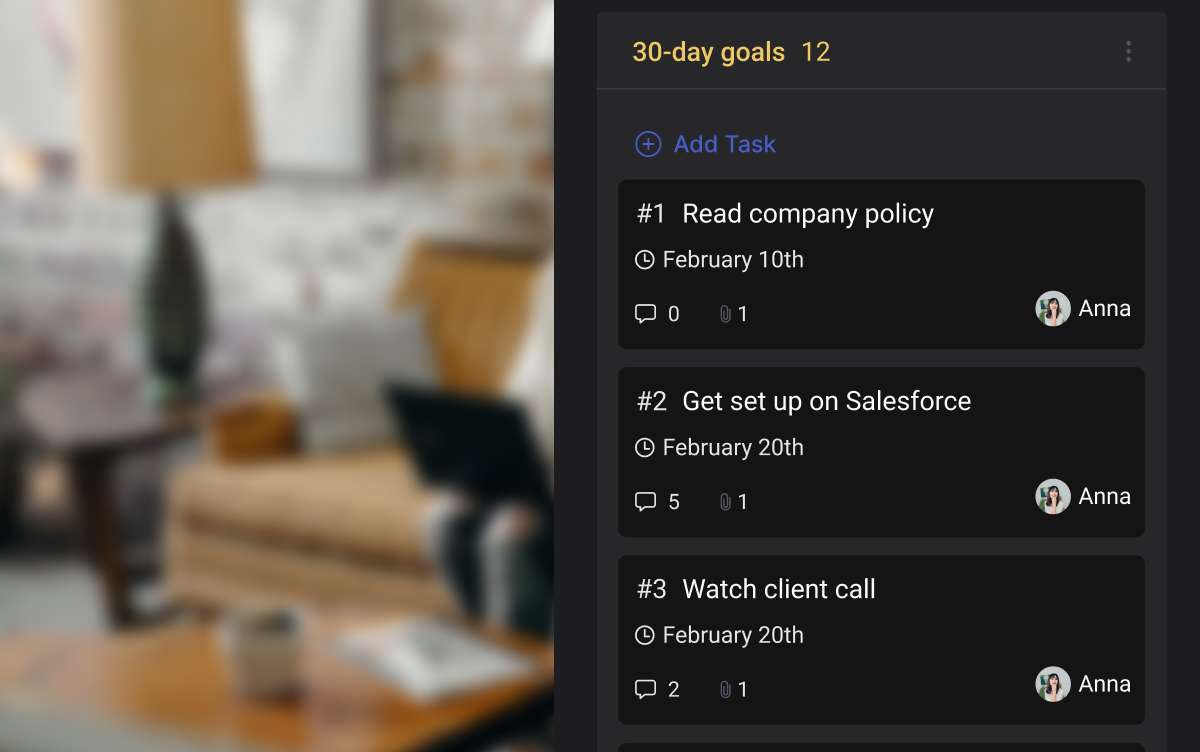
Set goals that are specific and measurable, but small. By day 30 a new hire should have met everyone they will work with regularly, completed core training, shadowed a teammate on live work, and shipped at least one small thing end to end. Even a tiny shipped artifact creates momentum.
What the new hire should accomplish:
Meet 1:1 with manager, buddy, and direct teammates. Complete role-specific training and product walkthroughs. Read internal docs covering customers, competitors, and how the team operates. Shadow a teammate on at least one live project. Ship one small deliverable, no matter how minor.
What the manager should do:
Pair the new hire with a buddy who is not their manager. Get tools and access set up before day one (nothing kills momentum like waiting on IT in week one). Schedule weekly 1:1s and protect them. Provide written context on the role's priorities and how the team measures success.
Days 31-60: Contribute
By day 31 the new hire knows enough to do real work. The next 30 days are about putting that knowledge to use. The manager stays close enough to help, but far enough to let the hire learn from real consequences.
This is the phase where most plans break. Managers either stay too involved (the hire never actually owns anything) or step back too far (the hire flounders). The right calibration: hand off work, give frequent feedback in writing, and resist the urge to "just do it yourself" when something stalls.
What the new hire should accomplish:
Take ownership of recurring work the manager used to do. Run a small project end to end (scope, plan, ship, review). Build relationships with two or three cross-team partners they will rely on long-term. Demonstrate proficiency with the core software the role requires.
What the manager should do:
Give honest, specific feedback. "You moved fast on the launch but missed the QA step" is more useful than "great job." Adjust scope based on what you have learned together. Stop reviewing every small decision. Trust grows when you give it room to.
"Research and conventional wisdom both suggest that employees get about 90 days to prove themselves in a new job. The faster new hires feel welcome and prepared for their jobs, the faster they will be able to successfully contribute to the firm's mission." - Talya Bauer, Cameron Professor of Management at Portland State University, in the SHRM Foundation report Onboarding New Employees
Days 61-90: Own
By day 61 the new hire should be carrying their share of the load. The third phase is about ownership. Driving an initiative without a safety net. Setting their own next goals. Identifying gaps the team has not yet seen.
This is where good hires start to surprise you. They notice things the rest of the team has stopped seeing. They challenge assumptions. They propose changes. The plan should leave room for that, not constrain them to checklist items.
What the new hire should accomplish:
Own a quarterly initiative end to end. Set their own goals for the next 90 days, in writing, with the manager. Identify one gap on the team or in the work, and propose how to fix it. Run their own 1:1s with the manager (lead the agenda, surface their own blockers).
What the manager should do:
Step back from daily review. Run a full performance check-in around day 90, with documented feedback both ways. Plan the next 90 days together, treating the hire as a peer on their own development. Decide what continued support, training, or stretch assignments will move them forward.
Build Your Plan
The fastest way to make a 30-60-90 plan stick is to draft it as a board, not a document. Drag milestones between phases until the rhythm feels right. Then share it with the new hire on day one and edit it together every week.
Try it: build a 30-60-90 plan
Drag milestones between phases to plan your onboarding rhythm. Add your own.
Meet 1:1 with manager and buddy
Set up tools and access
Read internal docs and SOPs
Shadow a teammate on a live project
Lead first small project
Master the core software stack
Connect with cross-team partners
Own a quarterly initiative
Set goals for the next 90 days
Identify one gap to fill on the team
Drag cards between phases or add your own
Tap a card, then tap a phase
Self-Check Questions for the New Hire
The plan is the manager's tool. The questions below are the new hire's. Run through them at the end of each phase. If you cannot answer most of them honestly, the plan needs adjusting before moving on.
End of Day 30: Have I learned the work?
Can I name five people on this team and what they do? Have I shipped one small thing end-to-end? Do I know what "good work" looks like in this role? Am I clear on the team's top two or three priorities this quarter? Do I know who to ask when I am stuck?
End of Day 60: Am I contributing?
Have I taken ownership of recurring work that used to sit with my manager? Do I have two or three cross-team partners I rely on? Am I getting feedback I can act on, in writing? Have I run at least one project from scope to ship? Where am I still over-reliant on hand-holding, and what would close that gap?
End of Day 90: Am I ready to own?
Can I drive an initiative without daily check-ins? Have I identified one gap on the team or in the work I want to address? Have I set goals for the next 90 days, in writing, with my manager? Do I understand how my work connects to company outcomes? What is the one thing I would change about how this team operates?
If you are the manager, hand these questions to the new hire on day one. Ask them in your weekly 1:1 around each milestone. The answers tell you more than any progress report.
Common Mistakes
Most 30-60-90 plans fail in predictable ways. Gallup research found only 12% of employees strongly agree their organization does a great job of onboarding new hires. The patterns below are why.
- Front-loading every milestone in the first 30 days A new hire who is overwhelmed in week two will not catch up in week ten. The first 30 days are for absorbing context, not proving themselves.
- Vague goals you cannot measure "Learn our products" is a wish. "Complete the onboarding tutorials and ship one fix to the homepage by day 21" is a plan. If you cannot tell whether the goal was met, it is not a goal.
- No buddy, no rituals, no rhythm A great plan on paper falls apart without a weekly 1:1, a peer to ask "stupid questions," and a clear ritual for marking progress. Skip these and the plan becomes paperwork.
- Treating the plan as the manager's document If the new hire cannot edit, comment on, or push back on the plan, it is not their plan. Ownership is what makes onboarding stick.
- Forgetting day 90 A 90-day plan that ends with no review or next-quarter handoff wastes the momentum it built. Day 90 is a checkpoint, not a finish line.
Tips for Remote Onboarding
Remote and distributed teams need extra structure. The casual context-building of an office does not happen automatically online, so you have to design for it. Remote work only succeeds when belonging is engineered, not assumed.
The fundamentals stay the same: clear goals, weekly 1:1s, a buddy, regular feedback. What changes is how you create belonging. A few things that help:
Use async video for context. Record short walkthroughs of the product, the team, and how decisions get made. New hires watch on their schedule and can re-watch as they ramp up. Async work reduces meeting load without losing context.
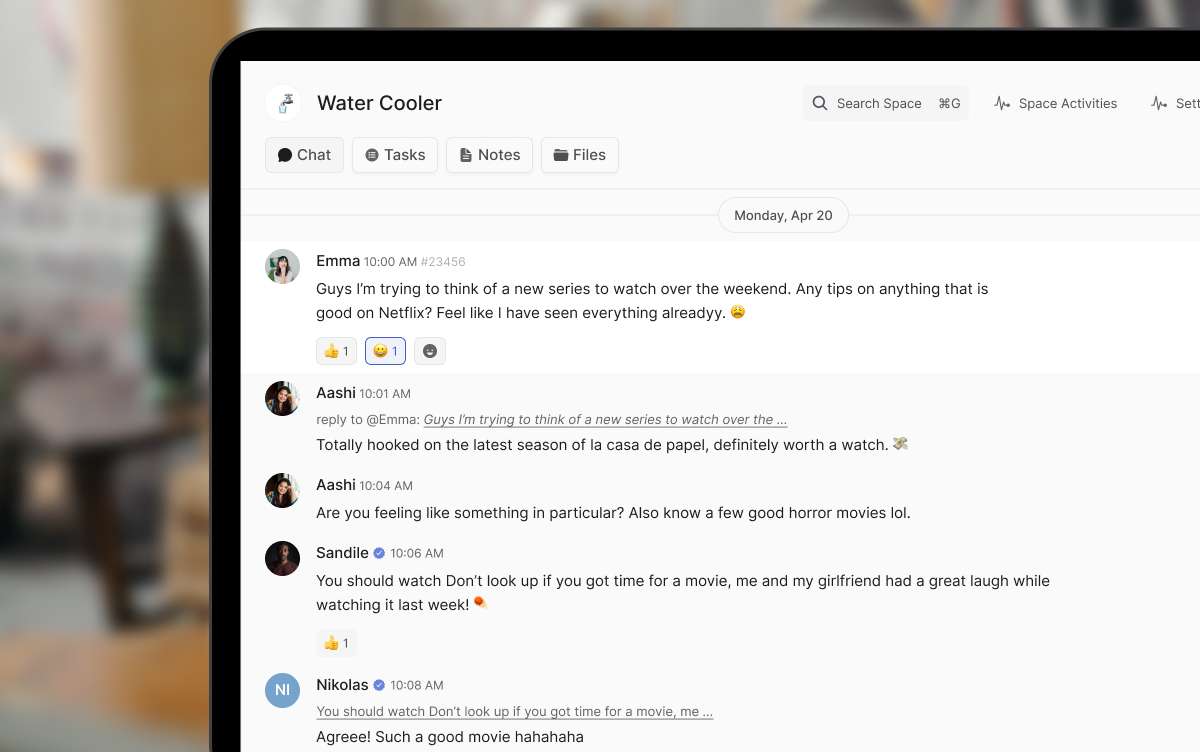
Build a low-stakes channel. A "watercooler" space where the new hire can ask casual questions without an audience makes a real difference. Teams that skip this step end up with new hires who are too shy to ask basic questions for months.
Schedule cross-team intros early. By day 30, the new hire should have spoken 1:1 with at least three people outside their immediate team. Online, those conversations rarely happen organically. Schedule them.
Document the plan in a shared workspace, not email. The plan should live where the work lives. Both manager and hire should be able to comment, update, and check off milestones in real time. Clear communication strategies matter more than ever during the first 90 days.
"In the absence of clear indicators of what it means to be productive and valuable in their jobs, many knowledge workers turn back toward an industrial indicator of productivity: doing lots of stuff in a visible manner." - Cal Newport, Author of Deep Work and Georgetown Professor
Get Started
The best 30-60-90 plan is the one your team actually uses. Start with the phase board above. Customize the milestones for the role. Share it with your new hire on day one and revisit it every week.
What gets reviewed gets refined. What gets refined gets shipped.
Want a workspace that combines chat, tasks, and notes for onboarding? Rock gives your team one place for the whole 90 days at a flat $89/month for unlimited users. Get started for free.