Never-Ending Client Revisions: Why They Happen and How to Stop Them
Every agency owner knows the feeling. A project that seemed simple three weeks ago has turned into an endless cycle of tweaks. For a design studio that cut revision cycles by structuring deep work, see our New Aesthetics case study and "one more small change." Your team loses motivation as the finish line keeps moving. Meanwhile, you cannot bill for the extra work or take on new clients.
This is the reality of unlimited revisions. It drains your resources, frustrates your team, and eats into your project margins. But it does not have to be this way.
In this article we explain why projects spiral out of control and how to set up systems that protect both your agency and your client relationships.
Why Never-Ending Revisions Happen
The root cause of too many revisions is often a lack of alignment. When neither party knows exactly what the final output should look like, the project becomes a guessing game. Each revision round becomes a chance for the client to add new requirements or change direction.
According to Harvard Business Review, unmanaged scope creep can throw any project off track. A clear scope of work prevents most of this, and a client working agreement locks the revision-count rule into the operational flow. Research shows that 52% of projects across industries face this challenge. For agencies, the impact is even worse because you work with multiple clients at once.

The Hidden Costs of Unlimited Revisions
When you allow client revisions to go unchecked, several problems show up:
- Team burnout: Creative people lose motivation when their work is constantly reworked
- Project delays: Timelines stretch as new requests pile up
- Revenue loss: You cannot bill for scope creep, and you miss chances with other clients
- Loss of trust: Clients often get frustrated too when projects drag on which reduces the chances of them rebooking your agency or extending the retainer
The 2025 Creative Industry Report found that agencies with weekly check-ins and clear deliverables see happier clients. Clear communication strategies and well-defined expectations help avoid confusion from the start.
What to Do About It: Setting Clear Boundaries
The goal is not to get rid of revisions entirely. Revisions are a normal part of creative work. The goal is to define the scope, set expectations, and create structure around the feedback process.
Define Revision Rounds and Their Purpose
Before any project begins, set exactly how many revision rounds are included. Make clear what each round is for. Here is an example structure:
Round 1: Align on initial direction and concept
Round 2: Refine details and address specific feedback
Round 3: Final tweaks and small adjustments
Each round should have a clear purpose. This stops clients from nitpicking things you will fix later anyway. It also gives them a framework for sorting their feedback by priority.
"My contracts specifically state what is out of scope, how many revisions and how long they have to approve. Running this on a visible board (see our revision and change request tracker) keeps both sides honest in real time, not at month-end. If they want something that is out of scope, I can either add it hourly or scope it out completely separately." - Alex Wilson, Owner of One Thing Digital
Document Everything in Your Contract
Your contract should clearly state:
- Number of included revision rounds
- What counts as a revision versus a new request
- Cost for extra work beyond the agreed scope
- Timeline for each revision round
When you make clear upfront that any work beyond a set number of revisions will cost extra, clients become more careful about what they ask for. For example: "This project includes two rounds of revisions. Extra changes will be billed at $80/hr."
This is not about charging for every little thing. It is about client communication etiquette that respects both sides' time and resources.
Never-ending revisions are one of the most common problems in client work. Having spent years managing stakeholder expectations firsthand, Steven Noble, Digital Designer and UI Developer, offers a simple tactic to keep projects on track:
If you've been in the trenches long enough you know what the stakeholder might ask for next so a short "What's not included" section can sometimes help. Don't frame it as "This is all you're getting" when you hand over the scope. Reassure your clients that anything that doesn't make it in the initial contract can go into a phase 2, and that any new idea that comes up goes in the backlog for the next phase. The client is happy their request is not forgotten, and you don't waste time on endless revisions for the current phase. - Steven Noble, Digital Designer and UI Developer.
How to Set Up a Better Revision System
Knowing what to do is one thing. Putting it into practice needs the right processes and tools.
Put All Client Communication in One Place
Scattered communication is the enemy of revision management. When feedback comes through email, Slack, text messages, and phone calls, things get lost. You end up doing extra work because someone forgot they already approved something.
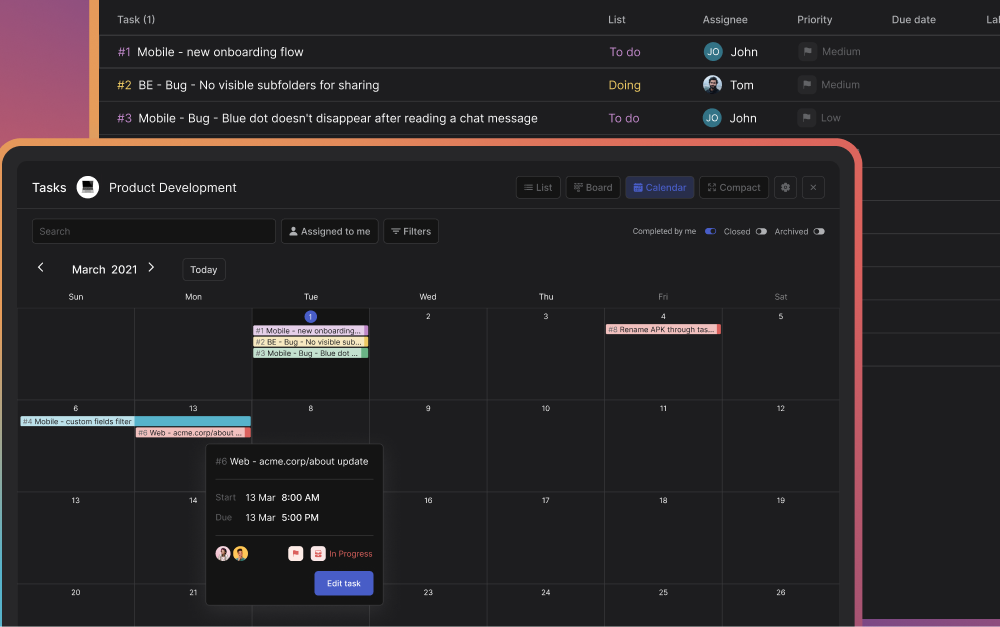
Create a single source of truth for all project communication. This means using one platform where clients can see upcoming tasks, submit feedback, and track progress. Tools like Rock, Basecamp, or Notion can help bring everything together.
Rock stands out for agencies because it is simple to use. You can set it up quickly and invite clients without worrying about per-user pricing. Unlike competitors that charge for each seat, Rock offers one fixed price. This makes it easy to add and remove clients from your workspace as projects come and go.
The fastest way to cut revision chaos is to bring clients into your workflow. When they can see exactly where things stand, they stop firing off random change requests and start working with your process.
Document Every Meeting and Decision
Last minute changes often happen because someone forgot what was agreed upon. Fight this by documenting everything:
- Create clear meeting agendas before every call
- Record meetings when possible
- Share meeting notes right after
- Get clear sign-off on key decisions
AI tools can help with transcribing and summarizing recordings if your team lacks bandwidth. The 2026 Agency Project Management Guide suggests keeping one source of truth for status and containing change requests to prevent scope creep.
Create Standard Service Packages
Random requests increase when every project is treated as totally custom. Try creating standard workflows with the same structure for all clients.
For example, a website redesign package might include:
- Discovery call and requirements gathering
- Initial design concepts (3 options)
- Two revision rounds
- Final delivery with asset handoff
When clients choose from set packages, they understand exactly what they are getting. This cuts down on random tasks your team has to handle. It also speeds up delivery because your team follows a proven project management framework.
Using a task board with set tasks and due dates keeps everyone on track. Clients can see the timeline, and your team knows exactly what comes next.
Use Async Communication When Possible
Not every piece of feedback needs a meeting. In fact, meetings can slow down the revision process. A client might request a call to discuss something that could be solved with a quick message.
Encourage asynchronous work where possible. Clients can leave detailed feedback in writing, and your team can address it during focused work time. This approach cuts down on interruptions and creates a paper trail of all requests.
The key is giving the right format for effective feedback. Give clients specific prompts rather than asking open-ended questions like "What do you think?" Instead, ask targeted questions about specific elements.
Managing Scope Creep When It Happens
Even with the best systems, scope creep (too many unexpected new revisions) will sometimes occur. The question is how you handle it.
Spot the Signs Early
Watch for these warning signs:
- Requests that fall outside the original brief
- "While you're at it, can you also..." statements
- New stakeholders joining mid-project with different opinions
- Changing business needs due to outside factors
When you spot these signs, address them right away. Waiting only makes the conversation harder.
Have the Conversation Directly
When a client makes a request that falls outside the agreed scope, respond quickly and professionally:
"That is a great idea, and we can definitely add it to the project. Since it falls outside our original scope, let me put together a quick estimate for the extra work."
This approach recognizes the value of their request while keeping your boundaries. Most clients respect this response because it is honest and professional.
We specify revisions in the contracts and anything extra is invoiced per hour or review round. It does cover you in case you have "messy" clients, which happens especially with too many "cooks" in the review process. For example, when you have multiple stakeholders contradict themselves or go back on what was agreed. Once everyone understands that additional edit rounds are invoiced extra, this can actually often work as an educational tool to get more organized internally on their side. Clemens Rychlik - COO at Hello Operator
Offer Scope Add-Ons at Fair Rates
Sometimes clients truly need extra work beyond the original agreement. Make it easy for them to request it by having a clear process for project changes.
Provide a simple change request form that captures:
- What they want to add or change
- Why they need it
- Their priority level
- Budget approval for the extra work
This keeps everything documented and stops scope creep from happening through informal channels.
Building Long-Term Client Relationships
The goal is not just to survive projects but to build lasting partnerships. Clients who understand your process become better partners over time.
Set Expectations from Day One
During your onboarding process, walk clients through your workflow templates and revision process. Show them where to submit feedback, how to track progress, and what to expect at each stage.
Agencies that invest in proper client management see higher retention rates and more referrals. A client who understands your process is far less likely to make unreasonable demands.
Celebrate Wins Along the Way
Revisions often focus on what needs to change. Balance this by highlighting progress and wins. When you deliver a milestone, point it out. When a client provides excellent feedback, thank them.
This positive approach encourages the behavior you want to see more of.
Conclusion: Revisions Are Not the Enemy
Client revisions are not bad by nature. They are part of the creative process. The problem shows up when scope becomes unlimited and requirements keep growing.
The best way to avoid project overrun is to bring clients into a clear system. Define your revision rounds. Document everything. Use tools that put communication in one place. And when extra work is needed, have honest conversations about scope and cost.
You can offer the option of extra scope at a fair price. This creates a better partnership and protects your agency's bottom line. In the long term, clients like working with agencies that have clear processes. It makes their lives easier too.
Stop treating endless revisions as something you just have to accept. Start building systems that protect your team, your profits, and your client relationships.
__________________________________________________
Ready to make client collaboration simpler? Rock brings messaging, tasks, notes, and meetings into one workspace. Set up in minutes, invite unlimited clients at one fixed price, and finally bring structure to your revision process.