Client Onboarding Checklist: Adjustable by Retainer Size
Most bad client onboarding looks a lot like bad software onboarding. Gartner's 2024 Tech Trends Survey asked 3,484 software buyers how they felt about recent purchases. 60% regretted the purchase within 12 to 18 months. The top reasons: higher-than-expected total cost (33%) and slow or complex implementations (32%). Your clients feel this way about your agency when onboarding is slow, vague, or overbuilt for the relationship they signed up for.
The frustrating part is that most advice pushes teams toward more process. That works for a $20K flagship account and crushes a $2K social-media retainer. The question is not whether to have a client onboarding checklist. For the stage-by-stage walkthrough that pairs with this checklist, see our 7-stage agency onboarding process. For the stage-by-stage walkthrough that pairs with this checklist, see our 7-stage agency onboarding process, or our client onboarding questionnaire for the 15 essential questions to send before kickoff. It is which tier of checklist fits this specific client. Solo freelancers, two-person studios, and 30-person agencies all run into the same problem: one checklist cannot cover every engagement size.
Run the widget below to pick your tier in 30 seconds. The rest of this article walks through the three tiers, the sales-to-delivery handoff that has to happen before kickoff, the 7-step checklist itself, the offshore realities that teams serving western clients navigate, the five anti-patterns that keep burning projects, and the 30/60/90 rhythm that catches churn before it costs you the account.
Which onboarding tier fits this client?
Three questions. Tailored checklist based on your answers.
The three onboarding tiers
Not every client needs the full playbook. The right amount of process is a function of retainer size, engagement type, and how much timezone overlap you have with the client. Teams often build one heavyweight checklist and apply it everywhere, then wonder why small clients churn in month two and big clients feel rushed.
Three tiers covers almost every real-world engagement. Pick the tier first, then customize within it.
| Tier | Fits when | Checklist depth | Best for | Skip this if |
|---|---|---|---|---|
| Essential | Retainer under $2K/mo or project under $5K. Timezone overlap full or partial. | 5-6 items. One welcome email, short questionnaire, single 30-min kickoff. | Solo freelancers, small retainers, fast-turn creative work. | The client has a procurement process or a legal review. Under-engineering becomes a red flag. |
| Standard | Retainer $2K-$10K/mo or project $5K-$25K. Most agencies live here. | Full 7-step flow, trimmed of enterprise artifacts. 15-question questionnaire. 60-min kickoff. | Mid-size retainers, ongoing marketing, dev, or design work. | The client has named multiple stakeholders on their side. Step up a tier to capture the map. |
| Premium | Retainer $10K+/mo or flagship project. Multiple stakeholders. Low timezone overlap. | Full playbook. 25+ question questionnaire. Stakeholder map. Written working agreement. 90-min kickoff. | Long-term accounts, enterprise buyers, flagship brand work where churn is expensive. | The engagement is a one-off fixed project. Drop to Standard. |
Essential suits small retainers and quick projects. The client wants clear expectations and a point of contact. Six items cover it.
Standard suits mid-size ongoing work. This is where most client-service teams live. The full 7-step flow applies, trimmed of enterprise-only artifacts.
Premium suits large retainers and flagship projects. You invest in the working agreement, the stakeholder map, and the 30/60/90 review rhythm because churn on a $10K+ account is an expensive mistake. The full agency playbook template covers the Premium setup end-to-end. 63% of customers say onboarding is an important consideration in the purchase decision itself, per Wyzowl's onboarding survey. On a premium account, this cuts both ways: strong onboarding earns the renewal; weak onboarding ends the relationship before you close the gap.
Before kickoff: the sales-to-delivery handoff
A client onboarding checklist starts before the kickoff. Sales closes the deal, then hands the account to delivery. If that handoff is a Slack message and a folder of emails, the kickoff meeting doubles as first discovery, and the client realizes delivery does not know what sales promised. Trust takes a hit in week one.
Karl Sakas, who consults with marketing agencies on operations, puts it simply.
"Agencies struggle with client onboarding because it's a transition point. You might have a sales process and a client delivery process, but you often don't have a system to ensure a smooth hand-off." - Karl Sakas, agency consultant, Sakas & Company
The handoff brief is that system. It is a written artifact, not a conversation. It captures what sales promised, what is explicitly not in scope, red flags sales noticed in the buyer's environment, who the real decision maker is, what political dynamics matter, and what the client wants to see early. A 30-minute internal kickoff between sales and delivery, anchored on this brief, prevents most of the misalignment that poisons month one.
The numbers back this up. PMI's 2024 Pulse of the Profession (n≈3,500 project managers) found that organizations with zero risk-management enablers reported 68.4% scope-creep incidence, while those with three or more saw 39%. Scope creep often starts with a misunderstanding about what was sold, not what was delivered. The handoff brief closes that gap before the client ever sees the delivery team. For more on keeping scope tight from day one, see our guide on defining and outlining your project scope.
Do not schedule the kickoff until you have the signed contract and the deposit if one is due. The handoff brief is only useful when the deal is actually closed.
The 7-step client onboarding checklist
Seven stages, regardless of tier. Each tier adjusts the depth of the artifact inside each stage, not the order of the stages themselves.
| Stage | Owner | Artifact | Time budget | Sample task or question |
|---|---|---|---|---|
| 1. Intake + contract | Sales lead | Signed contract, deposit confirmation, sales-to-delivery handoff brief. | Day 0-2 | Document what was promised, red flags, buying-committee politics, and decisions the client wants early. |
| 2. Internal team assembly | Account manager | Team assignment doc, roles, point of contact, backup. | Day 2-3 | Name the account lead, project manager, creative lead, and one backup per role. |
| 3. Onboarding questionnaire | Account manager | Written questionnaire (5, 15, or 25+ questions by tier) sent to the client. | Day 3-7 | "What does success look like in 90 days?" and "Who on your side signs off on work, and who advises?" |
| 4. Accounts + tool provisioning | Operations or ops-enabled PM | Shared workspace, file structure, billing, access list per tool. | Day 5-7 | Set up the shared space, add the client and their team, draft the weekly status template. |
| 5. Welcome letter | Account manager | Personalized welcome, team intro, timeline, access links, what you need from them next. | Day 7-10 | Include the kickoff date, who will be on the call, and the exact pre-read the client should review. |
| 6. Kickoff meeting | Account manager + delivery lead | Agenda pre-shared, written notes after, assigned next steps with owners. | Day 10-14 | 30-min (Essential), 60-min (Standard), or 90-min (Premium). Agenda published 48 hrs before. |
| 7. Regular update cadence | Account manager | Written weekly update template, 30/60/90 review calendar invites, shared dashboard. | Day 14+ | First weekly update within 7 days of kickoff. 30-day review on the calendar before the kickoff ends. |
Lincoln Murphy, a customer success consultant, frames the timing in a useful way.
"Time to First Value (TTFV) is the amount of time between the close of the sale and when the customer is onboard." - Lincoln Murphy, Sixteen Ventures
Every step in the checklist either shortens TTFV or makes the client confident it is coming. Steps 1 through 5 get the client ready, step 6 is the kickoff itself, and step 7 is the cadence that keeps value flowing after the kickoff ends. If step 3 (the questionnaire) takes three weeks to return from the client, TTFV balloons. Ship a short questionnaire and follow up once a day until it lands, rather than sending a 40-question document and hoping for the best.
Questionnaire depth by tier. Essential is five focused questions: primary goal for the engagement, top constraint, current state in one sentence, decision maker on your side, and preferred comms channel. Standard is 15 questions across five sections: business context, audience, goals and KPIs, budget and scope boundaries, brand and voice. Premium is 25+ questions across seven sections, covering the Standard set plus technology stack, team and stakeholders, security and compliance, and prior vendor experience.
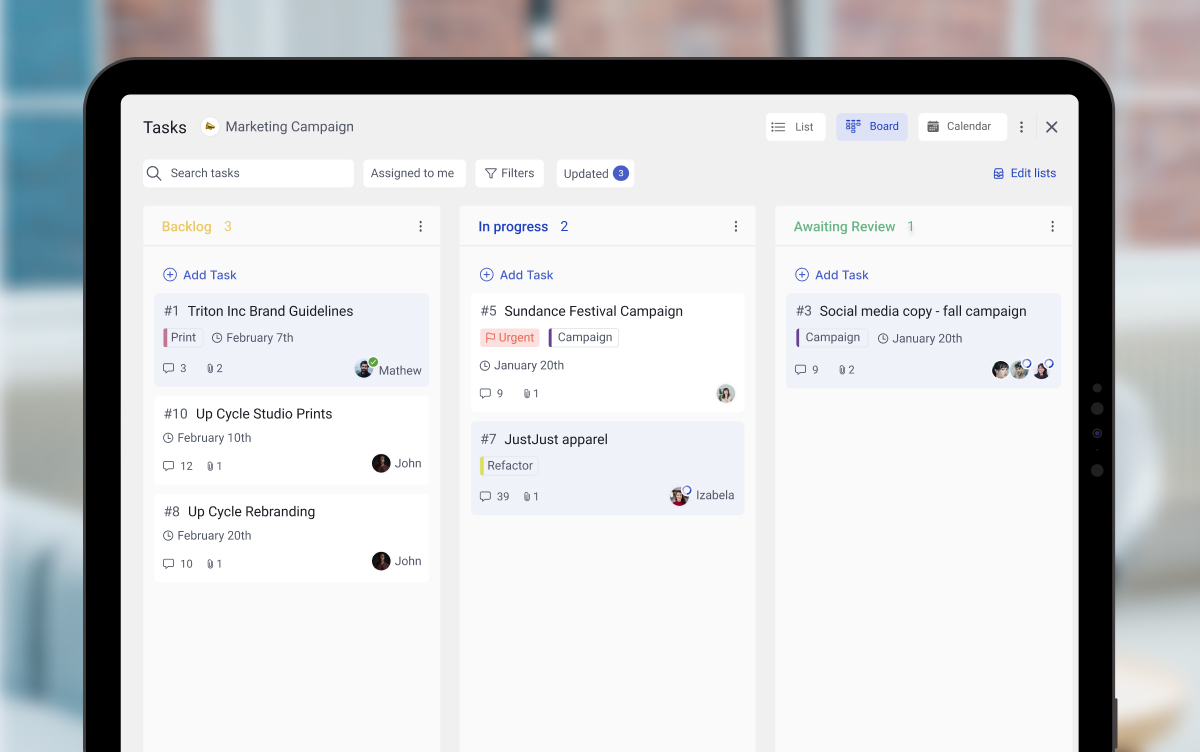
Free resource: download the full step-by-step client onboarding checklist template with sample questions per tier, a welcome-letter outline, and a kickoff agenda you can copy.
Offshore and timezone realities
Agencies and freelancers in the Philippines, Indonesia, India, and Latam serving clients in the US, UK, and EU face a coordination problem no domestic team has to think about. A single timezone mismatch can push a two-day questionnaire into a two-week blocker. The same onboarding checklist runs fine with a client in the same timezone and breaks with one eight hours away.

The fix is to bake the timezone reality into the onboarding itself, not treat it as a month-two surprise.
State the overlap window in the welcome letter. "Our team is online 9am-6pm Jakarta time. We guarantee a 4-hour live-overlap window at 9am-1pm your time, Tuesday through Friday. Outside that window, we respond within 8 business hours async."
Commit to response-time SLAs in writing. First response within the live window, full response within 24 hours. Put it in the working agreement, not just in the welcome email.
Clarify working-day definitions before month one. Local holidays, religious observances like Ramadan, and country-specific working patterns go in the welcome letter. Surfacing them before the first missed deadline is much cheaper than explaining them after.
Align on meeting format at the kickoff. Some clients expect a weekly live call. Others prefer async written updates with a monthly live sync. There is no universal right answer. The question is whether you have agreed on the format before the first disagreement. Our guide on client communication etiquette covers the day-to-day patterns that keep this working.
Five anti-patterns to avoid
Most client onboarding failures repeat the same five mistakes. Watching for these is usually more useful than adding more steps to the checklist.
| Anti-pattern | Why it happens | Fix |
|---|---|---|
| Over-engineering for small retainers | You built the 40-point checklist around a $20K flagship account, then ran a $1.5K social retainer through the same process. The client felt smothered. | Pick the tier first. Essential tier has six items. That is enough for a small client. |
| Kickoff as day one | Sales closed, then dropped a vague Slack message to delivery. The kickoff call became first discovery. The client realized delivery did not know what was promised. | The sales-to-delivery handoff is its own artifact, before the kickoff. Capture commitments, red flags, and political landscape in writing. |
| Skipping the uncomfortable conversations | Revisions cap, change-order process, kill fees, payment-late consequences. Surfacing them during onboarding feels salesy, so teams defer and end up negotiating from weakness mid-project. | Put them in the working agreement at onboarding, not after the first scope fight. Setting expectations up front is easier than changing them later. |
| One-way communication | The client is a passive recipient of weekly reports. They cannot see the board, cannot ask questions in context, and cannot flag concerns until the monthly call. | Give the client a seat in the workspace from day one. Shared chat, shared task board, shared notes. They react faster, churn signals surface earlier. |
| No exit or offboarding rhythm | The engagement ends and the account dies quietly. No referral ask (see our agency referral strategies), no case study, no final value summary. Retention economics argue against this. | Offboarding is in the checklist. Final value summary, referral ask, and case-study request all go on the 90-day calendar as tasks, not ad-hoc ideas. |
The cost of getting this wrong is not just a bad project. It is a lost renewal. Frederick Reichheld, who invented the Net Promoter Score and led Bain's loyalty practice, put a number on it.
"Even a 5 per cent increase in customer retention can produce profit increases of 25 per cent to 95 per cent." - Frederick Reichheld, Bain & Company
Good onboarding is the cheapest retention move available. It runs once, sets expectations, and prevents the five anti-patterns above from compounding. Weak onboarding costs you at every renewal conversation: the client questions your competence in month one, negotiates harder in month three, and leaves in month six. For the broader retention playbook, our piece on creating a true white-glove client experience covers what comes after the onboarding ends.
The 30/60/90 post-kickoff rhythm
Onboarding does not end at the kickoff meeting. The first 90 days is where churn signals appear, and most playbooks stop right where the real problem starts.
Day 30. Value delivered check. What has the client actually seen in output? Write a one-page summary and send it. Ask for written confirmation that it matches their understanding. If they push back or go quiet, you have surfaced the disconnect before it becomes a cancellation conversation.
Day 60. Scope vs reality audit. Compare what was in the contract to what the team is actually doing. Scope creep often starts here. A 20-minute internal review turns into a 10-minute conversation with the client. Either you agree to a change order, or you step back into the original scope. Both sides at least acknowledge the drift.
Day 90. Expansion or offboarding. If the engagement is going well, this is when you ask about additional scope and request a case study. If it is not, you at least understand why before the renewal call. The 90-day mark is far enough in that the honeymoon has ended and the real patterns are visible.
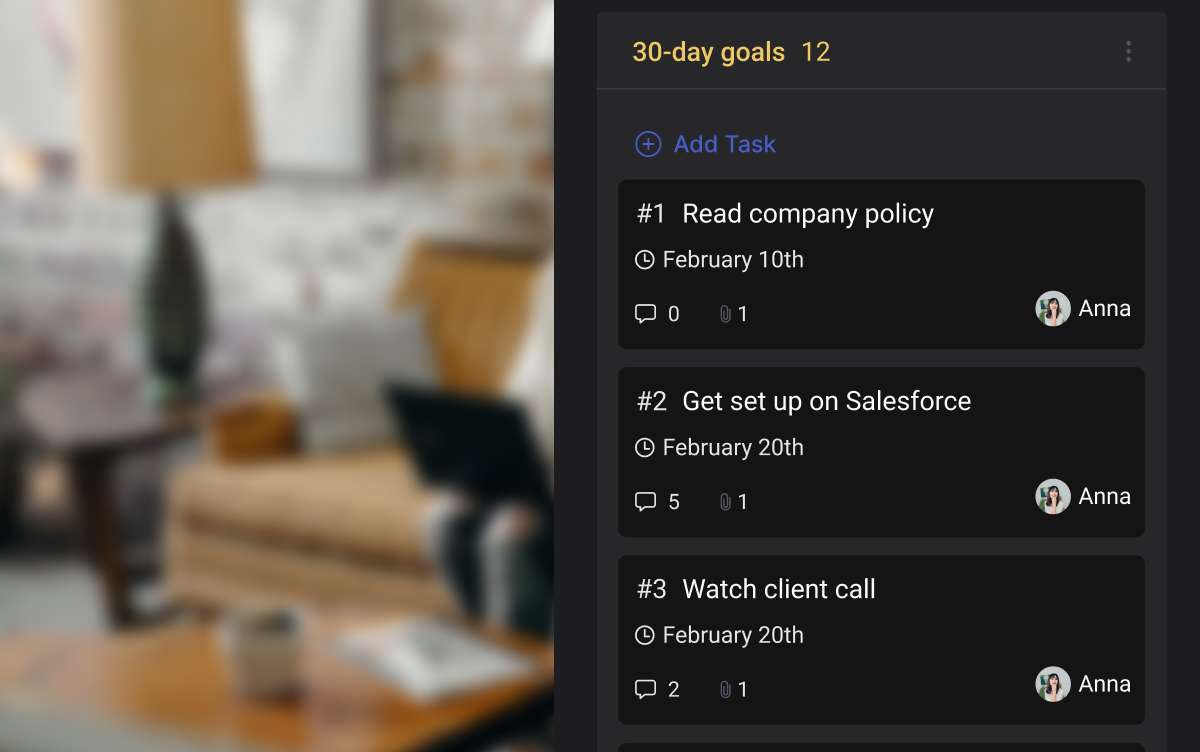
None of this is expensive. Each review is 15 to 30 minutes. The calendar invites go in at onboarding, not ad-hoc when someone remembers. For multi-stakeholder accounts, our guide on managing stakeholder communication covers the cadence design in more depth.
What we see client-service teams do well on Rock
We are not an agency. But we work closely with agencies, studios, and freelancers who run client work on Rock, and there are clear patterns in what the teams with the longest client relationships do differently.
The ones who keep clients longest create a shared space with the client from day one. The questionnaire goes in as a shared note the client can edit. The kickoff agenda gets pinned so the client sees it before the call. The weekly update is a shared thread, not a one-way email. The client is a participant, not an audience.
The ones who struggle keep everything in one-way channels. The client sees a monthly report and nothing in between. By the time the client has a concern, it has been brewing for weeks. The shared space model shortens the feedback loop from weeks to days.
Two small things make a big difference. First, a clear chat thread for each major workstream. When the client has a question about design, it goes in the design thread. Nobody hunts through months of email. Second, the onboarding questionnaire lives as an editable note, not a one-time form. As the engagement evolves, the team and client update it together. It becomes the source of truth about the account, not a forgotten PDF.
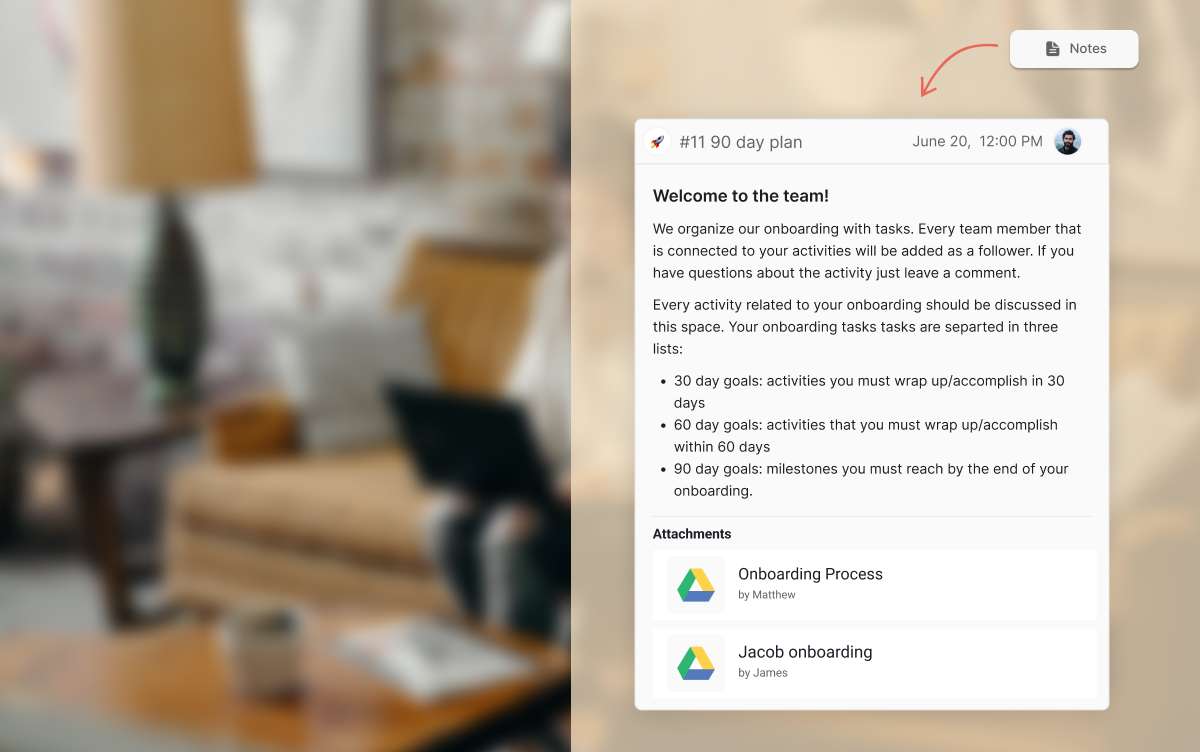
Rock's meetings mini-app starts the kickoff call in one click from the shared space with Zoom, Meet, or Jitsi. Notes from the meeting stay in the same space. Tasks assigned during the call are in the same space. Nothing lives in a separate tool, and nothing falls through the cracks between tools.
The short version
This client onboarding checklist works at three tiers. Essential is six items for small retainers. Standard is the full 7-step flow for most mid-size work. Premium is the full playbook plus stakeholder mapping and the written working agreement for flagship accounts. The sales-to-delivery handoff happens before the client ever sees delivery. The 7-step checklist runs in sequence with time budgets per step. Offshore teams bake timezone SLAs into the welcome letter. The five anti-patterns are worth watching every cycle. The 30/60/90 rhythm catches churn signals before they compound.
Run the widget at the top to pick the tier for your next client. Grab the full template to execute the 7-step checklist on Monday. For the work that comes after onboarding, our guides on project scope, project management frameworks, virtual meeting best practices, and communication strategies cover the next phases of the client relationship.
Client onboarding lives in one place when chat, tasks, notes, and meetings share the same workspace. Rock combines all four. One flat price, unlimited users, clients included at no extra cost. Get started for free.