The Pomodoro Technique: How It Works, the Research, and When 25 Minutes Doesn't
The Pomodoro Technique is a 25-minute focus method invented by Francesco Cirillo as a university student in the late 1980s, named after the tomato-shaped kitchen timer he used. The method is a simple loop: pick a task, work for 25 minutes, take a 5-minute break, repeat. After four cycles, take a longer break. The popularity of the method comes from how easy it is to start; the durability comes from a small body of research that explains why short focused intervals beat continuous attempted concentration.
This guide covers what the Pomodoro Technique is and how to do it. It walks through the research on why 25 minutes works and when the interval is the wrong fit (deep work, ADHD, developers). The closing sections compare Pomodoro with Flowtime and Deep Work, and cover how small teams can run synchronized Pomodoros.
What the Pomodoro Technique is
The Pomodoro Technique is a time-management method that breaks focused work into 25-minute intervals (called Pomodoros) separated by 5-minute breaks, with a longer 15 to 30-minute break after every fourth interval. The method's three rules are simple. A Pomodoro is indivisible: if it gets interrupted, it does not count. Each Pomodoro is dedicated to a single task. The break is mandatory.
The technique is not a productivity tool. It is a discipline against context switching. The 25-minute timer is the smallest commitment most people can make to single-tasking; the break is the smallest interruption that lets the brain reset before the next interval. Skip either piece and the method stops working.
"The appearance of so many internal interruptions is our mind's way of sending us a message: We are not at ease with what we are doing." - Francesco Cirillo, creator of the technique (francescocirillo.com)
Cirillo's frame is the right test for whether the method is helping. If you reach the end of a Pomodoro and the urge to check email or switch tasks was constant, the technique is doing its diagnostic job: it is making your distractions visible. The cure is not more willpower; it is examining what the interruptions tell you about the work itself.
Try one yourself. The timer below rolls through 4 Pomodoros (25-minute focus + 5-minute break) and gives you a long break after the fourth interval.
Why this still matters in 2026. AI assistants speed up the work, but they also add a constant stream of suggestions and tabs to chase. Protected focus blocks are one of the few things that hold up against that. The Pomodoro is less about the timer and more about deciding, for 25 minutes, what you will not touch.
How to do a Pomodoro: the 6 steps
The full method is six steps. The first time through it feels mechanical; by the third or fourth Pomodoro the rhythm becomes natural and the timer fades into the background.
- Pick one task Choose a single task you want to work on. Not three; one. The technique falls apart when you try to switch contexts mid-session, which is the whole point: Pomodoro is a single-tasking discipline disguised as a timer.
- Set the timer to 25 minutes A kitchen timer, a phone timer, or a dedicated app. The mechanical timer Cirillo originally used is shaped like a tomato, which is where the name comes from. Twenty-five minutes is the canonical interval; later sections cover when other intervals fit better.
- Work on the task until the timer rings No email, no Slack, no quick checks. If a thought about something else surfaces, write it on a piece of paper and return to the task. The interruption record is part of the method, not an optional add-on; reviewing it later shows you what is actually pulling your attention.
- Mark the Pomodoro as complete A checkmark on paper, a tally in a notebook, or a tick in your task tool. Cirillo uses Xs. The act of marking is small and feels silly, but it builds the visible record of finished sessions that turns Pomodoro from a timer into a tracking system.
- Take a 5-minute break Stand up, walk away, look out the window, get water. The break is not optional and not for checking email. The brain needs the disengagement to consolidate; skip the break and the next Pomodoro starts with cognitive residue from the last one.
- After 4 Pomodoros, take a longer break 15 to 30 minutes, away from the screen. The longer break is where the method's research-backed benefits show up most clearly: a recovery interval after roughly two hours of focused work prevents the fatigue accumulation that otherwise compounds across the day.
The interruption record (step 3) is the part most people skip and the part that produces the most useful insight after a few weeks. Patterns emerge: which apps pull you out, which kinds of thoughts intrude, which times of day are your worst for focus. The Pomodoro is the timer; the record is the diagnostic.
Why 25 minutes works (the research)
The case for short focused intervals is partly research, partly clinical observation, and partly the practical reality that most knowledge workers cannot maintain peak concentration for hours. Three pieces of research explain the underlying mechanics.
Attention residue. Sophie Leroy's 2009 University of Washington research introduced the concept of attention residue. When you switch from one task to another, part of your attention stays on the prior task and degrades performance on the new one. The residue is worse when the prior task is unfinished. The Pomodoro Technique creates clean breakpoints by completing a focused interval before switching, which reduces the residue cost compared to switching mid-task.
The cost of multitasking. Ophir, Nass, and Wagner's 2009 study in the Proceedings of the National Academy of Sciences found that heavy media multitaskers performed worse than light multitaskers on tests of filtering, working memory, and task-switching ability. The finding flipped the conventional wisdom: multitasking does not build the muscle for handling multiple streams; it weakens it. Pomodoro is a structural defense against the multitasking habit.
Recent meta-analytic evidence. A 2025 BMC Medical Education scoping review of 32 studies (combined N around 5,270) found Pomodoro use correlated with stronger focus (r=0.72), higher performance (r=0.65), and lower fatigue (r=−0.55). The effect sizes are large by social-science standards. Most of the studies are on students, not professionals; the magnitude still suggests the method does measurable work, not just psychological reassurance.
"Few can maintain peak cognitive intensity for more than an hour or so without some sort of relief." - Cal Newport, author of Deep Work (calnewport.com)
Newport's frame is what makes the break non-negotiable. The 5-minute interval is not a reward for finishing a Pomodoro; it is the recovery the next Pomodoro needs to land. Skip the breaks and the third or fourth interval delivers worse focus than the first.
When the 25-minute Pomodoro doesn't work
The 25-minute interval is canonical, not universal. Three patterns of work resist the standard timer, and forcing them into the rhythm produces worse output than abandoning the technique.
Deep work and creative drafting. Newport's deep work research argues that some cognitive tasks (writing, complex analysis, debugging hard problems) need 60 to 90 minutes minimum to reach peak intensity. The 25-minute timer cuts the warm-up off mid-stride. For deep work, longer blocks (60 minutes plus a 15-minute break, or 90 minutes plus 30) fit the cognitive demand better. Use the Pomodoro pattern as scaffolding, but stretch the intervals.
Developer flow. Programmers report that 25 minutes is too short for context-heavy work. A common adaptation is the 50/10 split: 50 minutes of focused coding, 10 minutes of break, repeated until natural lunch or end-of-day boundaries. The longer interval lets context build; the doubled break lets it clear before the next session.
Mid-flow timer rings. Even in canonical Pomodoro work, a timer that rings while you are clearly mid-thought does more harm than good. Cirillo's own guidance allows 5 to 10 extra minutes to finish the immediate thought; the rule is do not start a new sub-task during that time. The rule is not "stop typing whatever happens." The rule is "do not switch contexts."
Pomodoro for ADHD and neurodivergent users
Pomodoro is one of the most-recommended productivity techniques for adults with ADHD, and also one of the most commonly modified. The standard 25-minute interval works well for some neurodivergent users and badly for others; the difference depends on how the brain handles initiation friction and hyperfocus.
For initiation difficulty (most common ADHD focus issue). The 25-minute timer can be too long. A 10 or 15-minute starter Pomodoro creates a smaller commitment that the prefrontal cortex is more willing to make. Once the first short interval is complete, the threshold to extend into a normal 25-minute session drops. Some ADHD coaches recommend chaining 10/3, 15/5, then 25/5 intervals across a session as the day's executive-function capacity warms up.
For hyperfocus risk. Some ADHD users get into a focused state and stay there for hours, missing meals, breaks, and meetings. For this pattern the timer is more important than the interval; longer intervals (45/10) with a non-snoozable alarm work better than rigid 25/5 because the alarm becomes the reset signal the brain otherwise does not provide.
Interruption record as accommodation. The interruption-record step has particular value for neurodivergent users. Writing down the intrusive thought lets the brain release it without the executive function cost of suppression. Multiple ADHD coaches treat the record as the most important step of the method, more so than the timer.
"The mark of a person who is in control of consciousness is the ability to focus attention at will, to be oblivious to distractions, to concentrate for as long as it takes to achieve a goal, and not longer." - Mihaly Csikszentmihalyi, Flow
Csikszentmihalyi's frame is the right calibration. Focus is not a virtue measured in minutes; it is the discipline of choosing where attention goes and for how long. Pomodoro at any interval length is a tool for that discipline; the standard 25-minute version is the most common, not the only valid one.
Pomodoro vs other time-boxing methods
Pomodoro is one of several time-boxing methods. Each fits a different work pattern; teams that pick a single method dogmatically tend to underperform teams that switch methods based on the work in front of them.
| Method | Interval | Best for | Watch out for |
|---|---|---|---|
| Pomodoro | 25 min work, 5 min break, long break after 4 | Procrastination, single-tasking, learning new material, admin work | Too short for creative work that needs warm-up; rigid timer can break flow |
| Flowtime | Work until you choose to stop, then break for half the session | Creative work, deep problem-solving, anyone who finds Pomodoro restrictive | Easy to slip into long sessions without breaks; needs self-discipline |
| Deep Work blocks | 60-90 min minimum, longer for true depth | Senior-level cognitive work, writing, strategic analysis, coding hard problems | Hard to schedule with meetings; modern roles rarely allow uninterrupted blocks |
| 52/17 | 52 min work, 17 min break (DeskTime data) | Office workers with predictable cadence; mid-difficulty knowledge work | Not based on rigorous research; just one company's productivity-app data |
| Timeboxing | Fixed time block per task on a calendar (variable length) | Multi-project days, planning ahead, accountability against estimates | Overrunning a box derails the whole day; needs honest estimation |
| Time blocking | Group similar tasks into themed blocks (deep work block, shallow block) | Reducing context-switching across many small tasks | Calendars rarely match reality; meetings break themed blocks |
The honest read: Pomodoro is the right default for procrastination, single-tasking discipline, and admin work. Flowtime fits creative work and deep problem-solving. Deep Work blocks fit senior cognitive output. The point is not picking one method and forcing all work into it; the point is matching the method to the work and switching when the work changes.
What we recommend (Pomodoro for small teams)
Most Pomodoro writing assumes a single focused individual. Small teams can run a synchronized Pomodoro pattern that adds two structural benefits: shared focus blocks (everyone working heads-down at the same time) and predictable communication windows (questions land at the break, not mid-Pomodoro).

The basic protocol is three rules. First, the team agrees on synchronized Pomodoro blocks (for example, 9:30 to 11:30, four Pomodoros with breaks between). Second, during a Pomodoro, do-not-disturb is the default: messages get queued, not pinged. Third, the breaks are when async questions get answered, quick questions get raised, and handoffs happen.
The technique pairs naturally with how agile teams already work in sprints. Sprints are the team-level cycle (1 to 4 weeks); Pomodoros are the individual-level interval inside the day. Both use timeboxing as the core discipline, just at different scales. Eisenhower and MoSCoW handle prioritization upstream; Pomodoro handles execution discipline downstream of those decisions.
Common pitfalls
The mistakes below show up across teams and individuals who try Pomodoro and quietly drop it after two weeks. Most are pattern-recognition failures, not analytical ones.
- Forcing 25 minutes onto creative work Drafting, designing, and deep problem-solving often need 30 to 60 minutes of warm-up before the work starts to land. Forcing the 25-minute timer breaks the warm-up and the timer becomes the cognitive interruption it was supposed to prevent. For creative work, Flowtime or longer Deep Work blocks usually fit better.
- Breaking flow when the timer rings If the work is genuinely flowing, finishing the thought is not cheating. The Pomodoro is a discipline against procrastination, not a discipline against momentum. Cirillo's own guidance allows for 5 to 10 extra minutes when you are mid-sentence; the rule is do not start a new sub-task in that time.
- Treating the timer as productivity theater Sessions logged, breaks taken, screenshot posted to social. Looking productive is not the same as being productive. The check that matters is whether the marked Pomodoros are producing finished work; if the tally goes up but the project does not progress, the timer is the prop, not the practice.
- Skipping the long break After four Pomodoros, the 15 to 30-minute long break is where most of the fatigue-prevention benefit lives. Skipping it lets cognitive residue accumulate across the morning and the next session quality drops noticeably. The break is not the reward for working; it is part of the work.
- Ignoring the interruption record The point of writing down distractions during a Pomodoro is the review afterward, not the act of writing. Most teams skip the review and lose the diagnostic value. Look at the interruption log weekly and patterns emerge: which thoughts intrude most often, which apps pull you out, which times of day are worst for focus.
The biggest of the five is the third one. Treating the timer as productivity theater is how a discipline against context switching becomes a way of looking busy. The check that matters: are the marked Pomodoros producing finished work? If the tally goes up but the project does not progress, the timer is the prop, not the practice.
How to start using Pomodoro this week
If you have never used Pomodoro, do not try to convert your whole workflow on day one. Pick one task that you procrastinate on and run two or three Pomodoros against it. The honest test: did you finish more in those 60 to 75 minutes than you usually finish in the same window? If yes, expand the practice. If not, the method is not the constraint; the underlying task or motivation is, and a timer cannot fix it.
Three moves to start this week. Use the timer at the top of this page, a dedicated Pomodoro app, or a kitchen clock; the tool is irrelevant. Run a single 25-minute interval on a task you have been avoiding, with phone face-down and notifications off. Take the break. Decide whether the next Pomodoro is the same task or a different one. The discipline compounds from there.
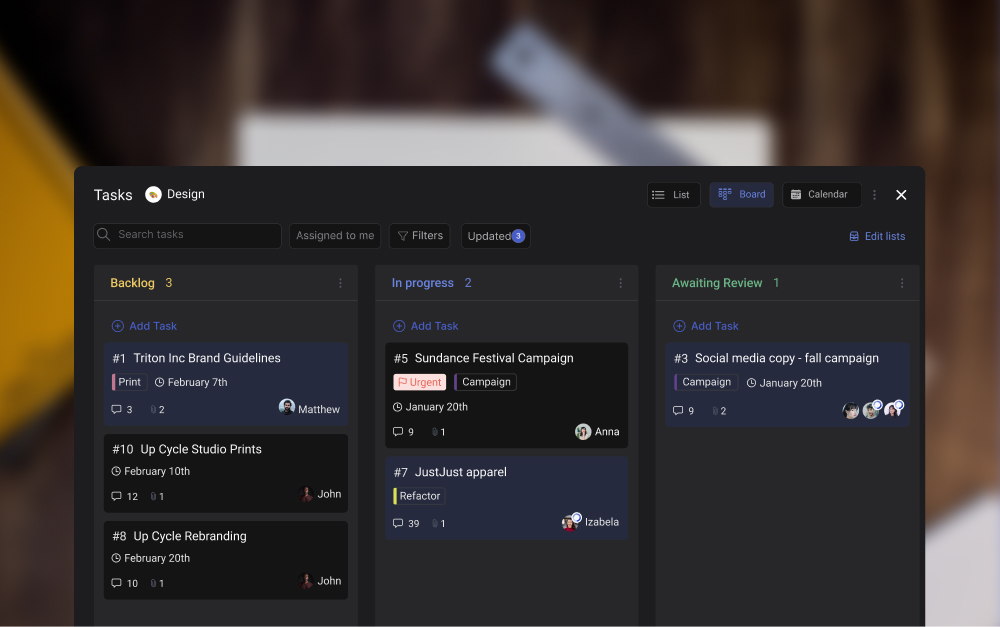
Run focus blocks alongside the team. Rock combines chat, tasks, and notes in one workspace where do-not-disturb conventions and shared status keep Pomodoros from being interrupted. One flat price, unlimited users. Get started for free.