How to Write an SEO Marketing Plan (With Template and Examples)
An SEO marketing plan is the SEO-specific layer of your broader marketing plan. Most SEO plans fail in the same predictable way: they are built around tactics (write blogs, build links) without a measurable goal in front of them. Three months later the team has shipped activity but cannot tell you whether anything moved.
This guide covers what an SEO marketing plan actually is and the 90-day framework that gets one out of the document and into the work. It walks through the keyword research that ladders to a publishing priority and the KPIs that tell you if the plan is working. It also covers where the plan should live so it does not die in a Google Doc by month two. Read on if your team is ready to run SEO as a project, not a tactic list.

What is an SEO marketing plan?
An SEO marketing plan is a 90-day to annual document that says what your team will do to grow organic search traffic. It covers four components: keyword and topic research, content production, technical site health, and link acquisition. The plan sits inside your broader marketing plan, inherits its goals, and assigns each piece of work to a named owner. It is the execution layer, not the strategy itself.
The function is often confused with SEO strategy. Strategy answers why a search audience should pick you and how you will win their queries. The plan answers what the team will do this quarter, when, and by whom. Most teams treat them as the same thing, which is why most SEO plans drift away from the strategy in month two.
"An SEO strategy defines how to overcome critical challenges by leveraging competitive advantages." - Kevin Indig, Organic Growth Advisor
Indig's framing is the cleanest test. If your plan does not name the critical challenge or the competitive advantage, you have a tactical to-do list, not a plan. The 90-day framework below assumes the strategy work has been done; if it has not, do that first.
The 90-day SEO marketing plan
The 90-day frame is the smallest unit of time in which an SEO plan can show meaningful results. Anything shorter is a sprint; anything longer drifts. Six steps, in roughly two-week blocks, take you from baseline to first measurable outcome.
- Days 1 to 14: Audit and baseline Pull the current numbers before changing anything. Index coverage from Google Search Console, top 50 ranking pages and queries, technical health (Core Web Vitals, crawl errors, broken internal links), and the inbound link profile. The audit produces a one-page baseline. Without it, the plan has nothing to measure against three months later.
- Days 15 to 30: Keyword research and topic clusters Build the keyword inventory the plan will execute against. Group keywords by intent (informational, commercial, transactional) and topic cluster. Map each cluster to a target page: hub article, supporting articles, or a redirect for cannibalization risk. The output is a publishing priority list, not a 2,000-row spreadsheet that nobody reads.
- Days 31 to 45: Content gaps and editorial plan Identify what competitors rank for that you do not. Pull competitor URLs ranking in the top 10 for your priority clusters, score each gap by traffic potential and difficulty, and turn the top 8 to 12 gaps into briefs. Each brief names the target keyword cluster, the sibling links, and the owner. Briefs are the bridge between research and shipped pages.
- Days 46 to 60: Technical fixes and on-page work In parallel with content production, ship the technical work the audit surfaced. Crawl errors, redirect chains, page speed, schema markup, internal linking. Most agencies underweight this step because it has no client-visible deliverable; the plan should explicitly budget time for it. Technical health is the floor; without it, content gains stay capped.
- Days 61 to 75: Publish and link build Ship the content briefs from week 4 to 5. Two to four pieces per week is realistic for a small team; faster is usually a sign that someone cut corners on the brief. In the same window, identify 8 to 12 link prospects per published cluster and run the outreach. Link building without published content underneath it does not compound.
- Days 76 to 90: Measure, report, iterate Pull the same numbers from week 1 and compare. Index coverage, top queries, pages ranking 5 to 20 (the easiest gains live here), and inbound link velocity. The 90-day report is not a status update; it is a planning input for the next quarter. Most plans skip this loop and the second quarter reverts to improvisation.

Two cautions on the 90 days. First, the dates are guidance, not contracts: a slow audit should not be the reason content production starts late. Run the steps in parallel where the team allows. Second, the loop is not done at day 90; the report at the end is a planning input for the next quarter, not a closing slide. Run it as a project, not a doc, and the second quarter compounds on the first.
Keyword research that ladders to a plan
Most keyword research dies as a 2,000-row spreadsheet that nobody reads. The plan that ships is built around topic clusters mapped to specific pages, not a long list of single keywords. The trick is grouping keywords by intent, scoring each group by difficulty and traffic potential, and turning each group into a target page.
| Keyword group | Intent | KD range | Planned page |
|---|---|---|---|
| Brand defense | Navigational | 0 to 10 | Homepage and product pages, plus a glossary entry |
| Head-term explainers | Informational | 30 to 60 | Hub article, 2,000 to 3,000 words |
| Long-tail how-to | Informational | 10 to 30 | Supporting articles in the cluster, 1,500 to 2,000 words |
| Comparison and alternatives | Commercial | 20 to 50 | Head-to-head and listicle pages |
| Templates and checklists | Transactional | 20 to 45 | Template pages with downloadable assets |
| Pricing and buy-now | Transactional | 40 to 70 | Pricing and product pages with strong CTAs |
The table above is a starter mapping; the specific groups depend on your category and audience. The point is the structure: every keyword in the inventory belongs to a group, every group is mapped to a page, and the publishing priority is set by traffic potential against keyword difficulty. A spreadsheet that lacks this mapping is research, not a plan.
"SEO strategy is not the same as tactics. The strategy is what you do at a high level; tactics are the specific steps." - Aleyda Solís, Founder, Orainti
Solís makes the distinction the SERP regularly fails to. The plan operates at the tactics layer; it inherits the strategic choices from upstream and turns them into the work that ships. Keyword research is the bridge between the two. Without it, the plan defaults to whatever the loudest team member googled that week.
Content gap analysis
Content gap analysis answers a single question: what do competitors rank for that you do not? The output is a prioritized list of pages to build. The most common mistake is treating it as a brainstorm rather than a structured comparison; the second is producing a 200-row gap list and never publishing against it.
| Competitor topic | Volume / month | Their angle | Your gap and page idea |
|---|---|---|---|
| Annual marketing planning | 1,000 | Generic in-house planning guide | Agency-flavored multi-client planning hub with retainer scope |
| Marketing budget template | 2,400 | Excel template, no narrative | Hybrid guide and downloadable budget worked example |
| Marketing operations framework | 800 | Enterprise martech-heavy | Lean ops framework for 5 to 50-person teams |
| Quarterly business review | 1,600 | Sales QBR, not marketing | Marketing QBR template tied to client retainer reporting |
The four-column structure above is the minimum useful version. Pull the top 10 ranking URLs for each priority cluster, score the gap by traffic potential and difficulty, and turn the top 8 to 12 gaps into briefs. Briefs are the bridge between research and shipped pages; without them, the plan becomes a vague writing schedule. For the broader digital integration layer that ties SEO into social, content, email, and paid, see the digital marketing plan. The wider editorial system around those briefs lives in your content marketing plan, and the platform-specific social cadence and community work sits inside a social media marketing plan.
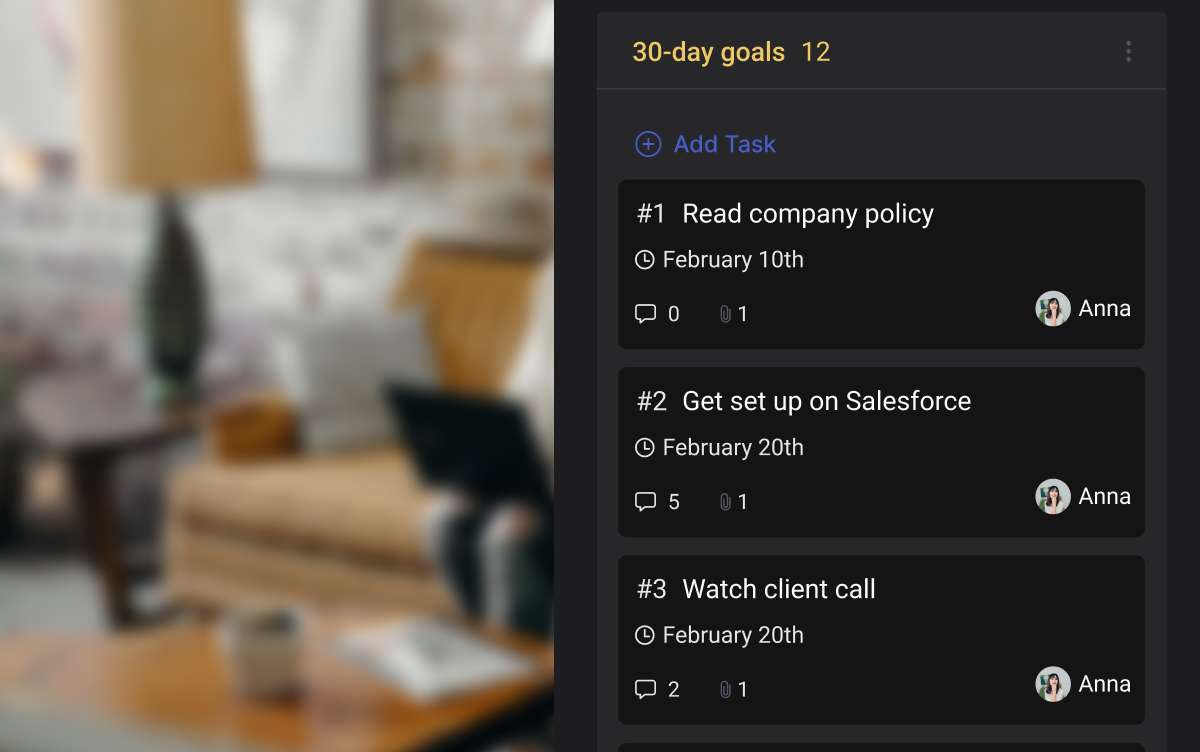
For agencies running this for client retainers, the gap analysis is also the cleanest selling artifact: it shows the client where they are losing share and gives a concrete plan for closing it. Campaign management handles the production side once the briefs are written.
Measurement and reporting cadence
The plan is only as good as the report it produces. Measure the wrong things and the team improves the wrong things; measure on the wrong cadence and the team optimizes for noise. Split the KPIs into leading indicators (early signals you watch weekly) and lagging indicators (outcomes you report monthly to stakeholders).
| KPI | Type | Source | Cadence |
|---|---|---|---|
| Indexed pages | Leading | Google Search Console | Weekly |
| Pages ranking 5 to 20 | Leading | Search Console + rank tracker | Weekly |
| Click-through rate by query | Leading | Search Console | Monthly |
| Inbound link velocity | Leading | Backlink tool of choice | Monthly |
| Organic sessions | Lagging | GA4 | Monthly |
| Organic conversions | Lagging | GA4 plus CRM | Monthly |
| Brand search volume | Lagging | Search Console | Quarterly |
The leading indicators are where the plan gets adjusted; the lagging indicators are where the plan is judged. According to the Backlinko organic CTR study, the first Google result earns roughly a 27.6 percent click-through rate, around ten times the click-through of the tenth result. For the broader funnel diagnostic of where SEO traffic converts (and leaks), see the marketing funnel guide. Pages ranking 5 to 20 are where the easiest gains live; pull this segment from Search Console weekly and prioritize the on-page work that moves them up.
The cadence matters as much as the numbers. A 15-minute weekly status check on the leading indicators, a 30-minute monthly readout against the full KPI table, a 60-minute quarterly retrospective that decides what changes in the next 90 days. Tie the SEO KPIs back to your overall marketing KPIs that actually matter; an SEO plan disconnected from broader marketing measurement quietly underweights itself.
Common pitfalls
The mistakes below show up across SEO plans that intend to ship and slowly drift back into improvisation. Most are pattern-recognition failures, not analytical ones.
- Picking keywords by volume alone High-volume head terms look exciting on a slide. They also tend to be the hardest to rank for, with intent that is muddy or commercial-only. The plan that ranks is built around clusters where the topic, the volume, and the intent all line up. Volume without intent is vanity; intent without volume is busywork.
- No reporting cadence baked into the plan An SEO plan that is not reviewed monthly is improvisation with extra steps. Set the cadence before you sign off: a 15-minute weekly status check, a monthly readout against the KPI table, a quarterly retrospective that decides what changes in the next 90 days. Without it, the plan is a deck nobody opens.
- Treating it as a doc, not a project SEO plans get written in Google Docs and then orphaned from where the work happens. Briefs live in one tool, tasks in another, links in a spreadsheet, the report somewhere else. The compounding gain comes from running it as one project with one source of truth, not from any single tactic.
- Skipping the technical baseline Technical work has no client-visible deliverable, so it gets cut first when the calendar tightens. Three months later the new content cannot rank because the underlying site is slow, broken, or thin on internal linking. The fix is to budget technical hours explicitly in the plan, not to leave them as the residual after content.
- Ignoring brand search Brand-search volume is the cleanest leading indicator of whether the SEO plan is doing its job. People who know about you Google your name. Most plans never measure it because it is not in the standard SEO tool dashboard. Pull it from Search Console quarterly and watch it climb; if it does not, the rest of the plan is not landing.
The biggest of the five is the second one. SEO plans without a review cadence have a half-life of about 90 days; after that the team is improvising and the plan is wallpaper. Setting the cadence (weekly check, monthly readout, quarterly retro) before the plan is signed off is what turns the document into a working artifact.
What we recommend
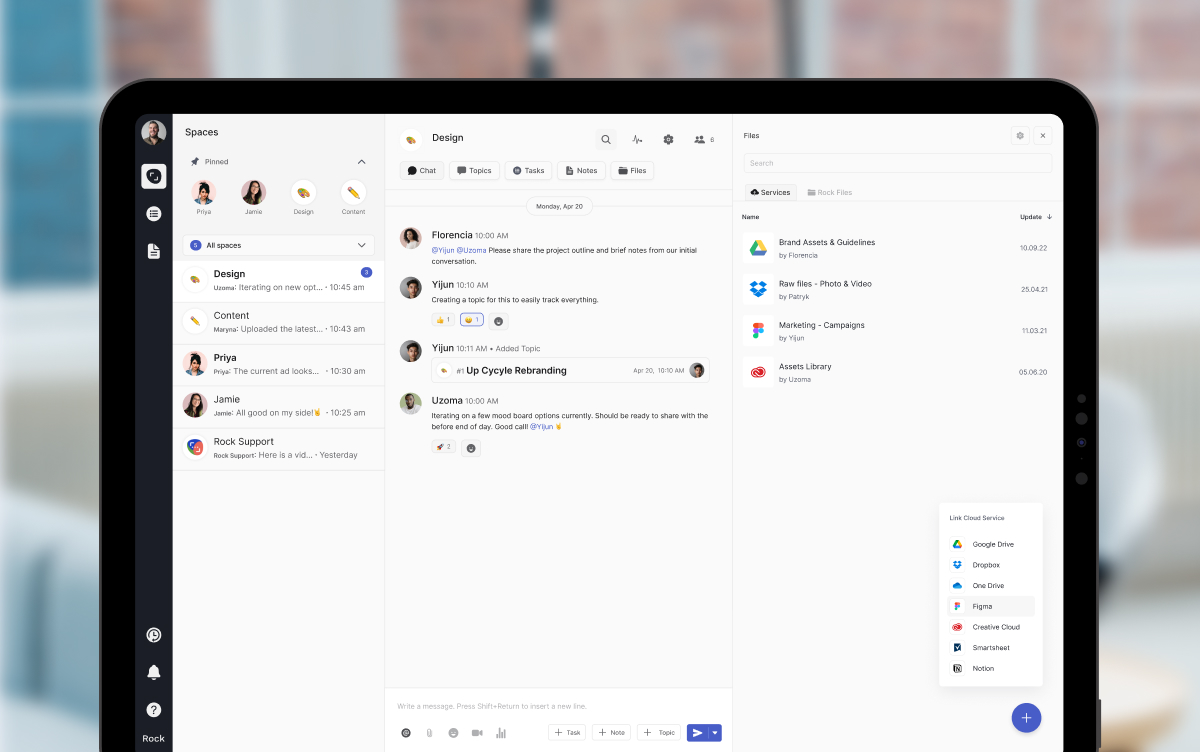
At Rock we run SEO plans inside the same workspace where the marketing team works. The plan lives as a pinned note in the marketing space; the keyword inventory and gap analysis live as linked sheets in Files; the briefs live as task cards on the production board. Status updates happen in chat next to the work, not in a separate weekly meeting that everyone half-attends. One workspace, one source of truth.
For agencies running SEO on retainer, the plan structure has one extra layer: it is reusable across clients. The 90-day framework, the KPI table, the gap analysis structure, and the pitfalls list are the same; only the keyword inventory and content briefs change per client. Build the SEO plan template once, then duplicate the space per client. The compounding gain across a portfolio of retainers comes from this reuse, not from any single tactic.
The retainer-specific pieces that the in-house lens misses sit in three adjacent disciplines. Capacity planning tells you how many SEO retainers your team can serve without quality dropping. Billable hours ties the plan to the financial side; an SEO plan that runs over its retainer hours quietly is the most common cause of margin erosion in agency work. Agency KPIs close the loop on the operating side, sitting underneath the per-client SEO KPIs.
"Search is a behavior, not a channel." - Rand Fishkin, SparkToro
Fishkin's framing is increasingly important as search splits across surfaces. The SparkToro and Datos State of Search research found Google still commands roughly 73.7 percent of desktop searches across 41 analyzed sites, but AI tools and other surfaces are taking measurable share. The plan should account for this; building only for Google ranking is a 2024 SEO plan, not a 2026 one.
Pair the SEO plan with the broader operating system and the discipline compounds. Marketing operations runs the day-to-day execution. The pillar marketing plan sits upstream as the artifact this SEO plan inherits its goals from. Campaign management handles the one-campaign-at-a-time view when an SEO push needs paid or social support.
Free resource: download our marketing plan template to get the strategy, roadmap, and execution board structure ready to copy into your workspace.
How to start your SEO plan this quarter
If your current SEO is unplanned (most teams), do not try to write a perfect 12-month plan in the first week. Run a 90-day plan against the framework above, and use the retrospective at day 90 to plan the next quarter. The first 90 days are about getting the system working, not winning every cluster.
Three moves to start this week. Pull the audit baseline (index coverage, top ranking pages, technical health, link profile) from Google Search Console and store it where the team can see it. Pick three priority keyword clusters from your existing list and turn them into briefs; if you do not have a list, run the keyword research step first. Schedule the cadence on the calendar before you sign off on the plan: weekly status, monthly readout, quarterly retro. Without the cadence, none of this matters.
Run the SEO plan inside the same workspace as the work. Rock combines chat, tasks, and notes in one workspace. One flat price, unlimited users. Get started for free.